


What SnapMeasureAI Is
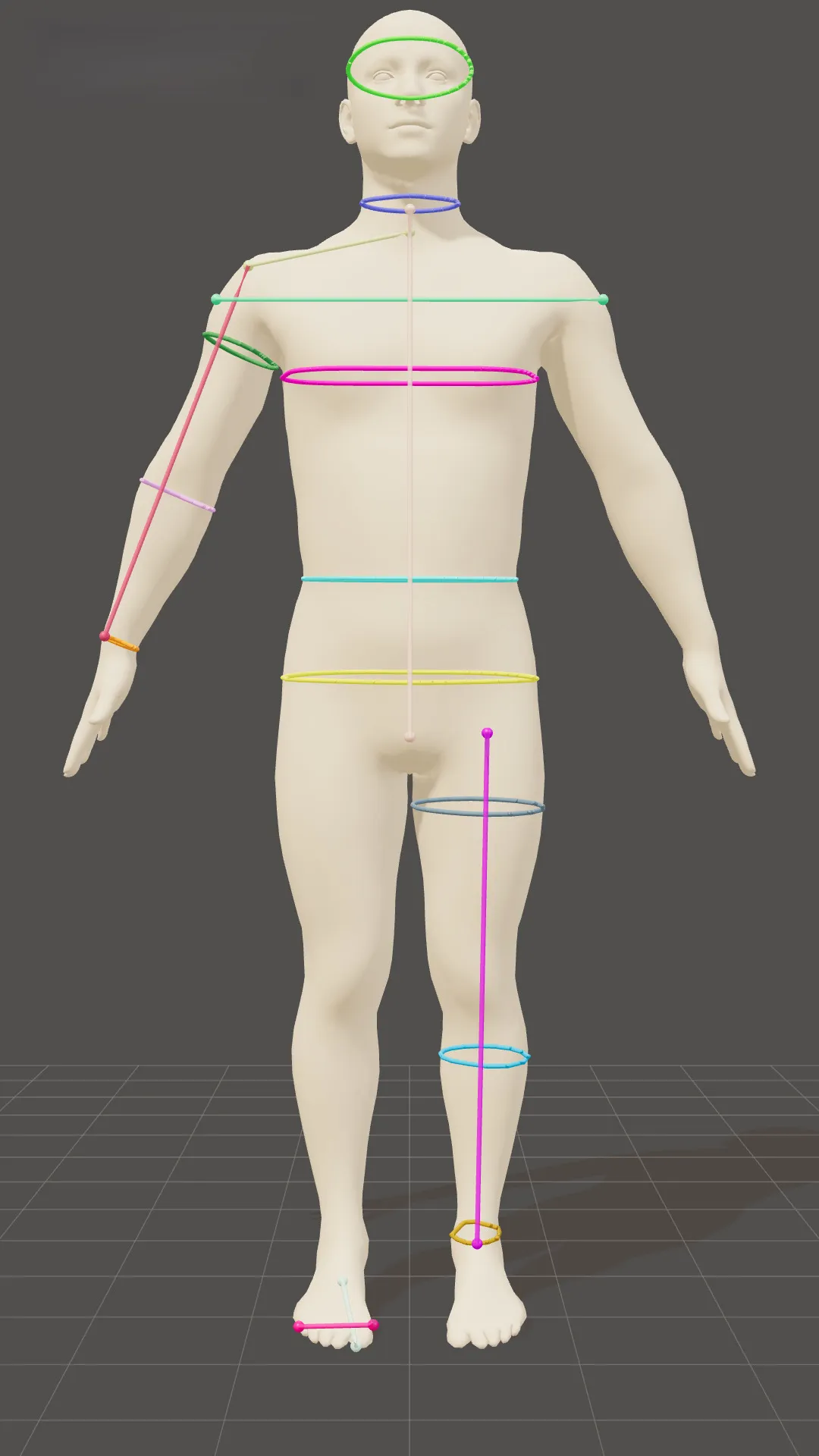
SnapMeasureAI is an AI body-measurement and 3D scanning tool that needs nothing more than a smartphone camera. Take two photos, a front and a side, and in roughly ten seconds it produces a detailed 3D body model and over a hundred measurements. No depth sensor, no measuring tape, no fitting room. The product's own line sums it up: two photos, ten seconds, 100-plus measurements.
Underneath, it builds a 10,000-point 3D body model and pulls anthropometric data from it, so the measurements come from a reconstructed shape rather than a few flat estimates.
How It Works
The flow is three steps. A user captures a front photo and a side photo with a phone or webcam. The AI then fuses both views to predict a highly accurate 3D model of the person's body shape. From that model it derives measurements or exports the 3D body itself. Because it works on standard photos, it runs on both desktop and mobile and does not require any special hardware.
The technology is patented and built on Cambridge research, trained on a large dataset, over a million body scans, hundreds of thousands of backgrounds, and tens of thousands of body poses, which is what lets it hold up across real-world conditions rather than only in a controlled studio.
Accuracy in Real Conditions
SnapMeasureAI reports accuracy typically within half an inch on major measurements. Just as important, it is designed to work across any body type, pose, skin complexion, and background, so it does not fall apart when someone scans in a cluttered bedroom instead of against a blank wall. That tolerance for messy inputs is a big part of why it is deployable to everyday consumers.
Measurements and 3D Export
From the 10,000 body points you can pull effectively unlimited custom measurements, and the tool can export the body as a 3D OBJ file. That export matters for teams building virtual try-on, made-to-measure production, or avatar pipelines, since the model is a real asset they can carry into other software.
Who It Is For
SnapMeasureAI is built for organizations that win or lose on fit data.
- Retail and apparel brands cutting return rates and lifting conversion with accurate size recommendations
- Digital health platforms tracking weight loss and body changes over time
- Fitness apps monitoring muscle circumference and showing visual progress
- Uniform and workwear companies automating fitting and reducing costly remakes
For apparel specifically, returns driven by wrong sizing are a direct cost, and replacing guesswork with a measured 3D model attacks that problem at the source. For health and fitness, the same scan becomes a progress-tracking instrument.
Why Two Photos Is the Whole Point
Plenty of body-scanning approaches exist, but most carry friction that kills adoption. Booths and turntables need physical space and staff. Depth-sensor apps need specific hardware. Tape measurements need a second person and still drift from one session to the next. SnapMeasureAI strips that away by working from two ordinary photos, which means the barrier to a scan is roughly the barrier to taking a selfie. That accessibility is what makes consumer-facing deployment realistic, a shopper can measure themselves at home, on their own phone, before adding to cart, and a patient can repeat a scan every few weeks without going anywhere.
The reliability claims are what make that promise hold up outside a lab. Training on a large, varied dataset of body scans, backgrounds, and poses is precisely the work needed so the model does not break when the input is a real person in a real, untidy room. A measurement tool that only performs under studio conditions is not deployable to actual customers; one that tolerates any background, pose, and body type is.
Building On Top of It
Because the output is a true 3D model rather than a flat number, it slots into other systems. The OBJ export lets a brand drop a customer's body into virtual try-on, feed a made-to-measure production line, or seed an avatar. The 10,000 body points mean teams can define whatever custom measurements their sizing logic depends on instead of being limited to a fixed list. That extensibility is what separates a one-off measuring gadget from a piece of infrastructure a fit or health product can be built around.
Pricing and Access
Public pricing, SDK, and API details are not laid out on the main pages, but a free demo is available so you can test accuracy on real bodies before any integration conversation. Businesses planning to embed the technology should contact the team for integration and commercial terms, and confirm current options directly rather than relying on third-party summaries.
Verdict
SnapMeasureAI takes a genuinely hard problem, accurate body measurement without specialized hardware, and solves it with two phone photos. The patented, Cambridge-backed model trained on a large and varied dataset is what gives the half-inch accuracy credibility across messy real-world inputs. For apparel brands fighting returns, and for health and fitness platforms that need repeatable body data, the 3D model plus OBJ export make it more than a sizing gimmick. Run the free demo on a few real bodies first, since that is the fastest way to judge whether the accuracy holds for your use case.