

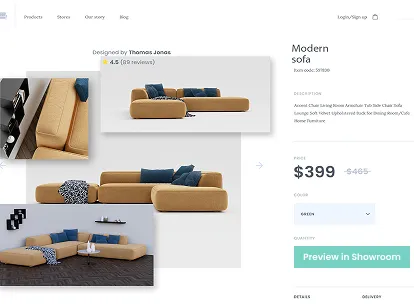

What Zolak is
Zolak is a 3D product visualization platform built mainly for businesses that sell configurable, visually-driven goods, with furniture and home decor brands as the obvious sweet spot. Instead of booking another photoshoot every time a sofa gets a new fabric, retailers feed Zolak a single 3D model of the product and reuse it across every customer touchpoint: static renders, a 360 viewer, a live configurator, augmented reality, and full virtual showrooms. The model is the source of truth, and everything else is generated from it.
That single-source approach is the practical reason teams adopt it. A traditional catalog with dozens of color and material variants means dozens of separate photo sets. With Zolak, one model plus its material library covers all of them, and the renders stay consistent because they share the same lighting and geometry.
How it works
You bring or commission a 3D model, then load it into Zolak along with its material and variant data through the centralized CMS. From there the platform exposes that asset as different experiences depending on which modules you enable. The CMS is where you manage assets, swap materials, and configure which variants a shopper can pick, so non-technical merchandising staff can keep listings current without touching a 3D editor.
Zolak Studio
Studio handles imagery. It produces AI-generated and 3D renders in silo, lifestyle, and close-up styles, and can draft product descriptions to go with them. It runs on a pay-as-you-go credit model, which suits teams that need bursts of new imagery around product launches rather than a flat monthly render quota.
3D Viewer and Configurator
The 3D Viewer gives shoppers 360 rotation, 4K zoom, PBR materials, and realistic lighting so they can inspect a product the way they would in a store. The 3D Configurator layers real-time customization on top: swap colors and materials, see the change instantly, and watch dynamic pricing update as options change. For furniture, where the buying decision hinges on whether a finish matches a room, this is the part that tends to move conversion. It also cuts support load, since shoppers answer their own questions about how a configuration looks instead of emailing for photos that may not exist yet.
Virtual Showroom and AR
The Virtual Showroom places products inside pre-designed interiors, and it can recreate a customer's own room from an uploaded photo using AI layout recreation, then drop the product into that scene. Augmented Reality extends the same idea to the shopper's phone, letting them place an item in their actual space at true-to-scale accuracy before they buy. Together these features target the single biggest reason home goods get returned: the thing looked different at home.
Who it is for
Zolak fits e-commerce brands and manufacturers whose products are configurable and where appearance drives the sale. Furniture and home goods retailers are the core audience, but any catalog with lots of color, material, or finish variants benefits from replacing photography with a reusable 3D pipeline. It is less relevant for sellers of simple commodity items where a flat photo already tells the whole story.
Integrations
It connects to the major commerce platforms, including Shopify, WooCommerce, Magento, BigCommerce, PrestaShop, Salesforce Commerce Cloud, Shopware, and Wix, so the 3D viewer and AR can be embedded into an existing storefront rather than forcing a rebuild.
Pricing
Zolak uses a modular structure. There is a quote-based one-time setup fee, a platform fee that starts around 25 dollars per month, and optional modules priced individually. Studio imagery runs on pay-as-you-go credits rather than being bundled into the subscription. A free trial is available. Because setup is quote-based and depends on how many models you need built, anyone evaluating it should request a tailored quote and confirm current figures on the site.
Verdict
Zolak is a focused answer to a specific retail problem: showing configurable physical products convincingly online without endless photography. The strength is breadth from one asset, since the same model powers viewer, configurator, showroom, and AR. The trade-off is that you need quality 3D models to start and the setup is a custom engagement, so it rewards brands with a real catalog and a return-rate or conversion problem worth solving, more than a tiny shop testing the waters. For a retailer drowning in photoshoot costs and variant management, though, consolidating everything onto one reusable 3D asset is the kind of operational change that pays back over a full product line rather than a single listing.