


The problem Scout solves
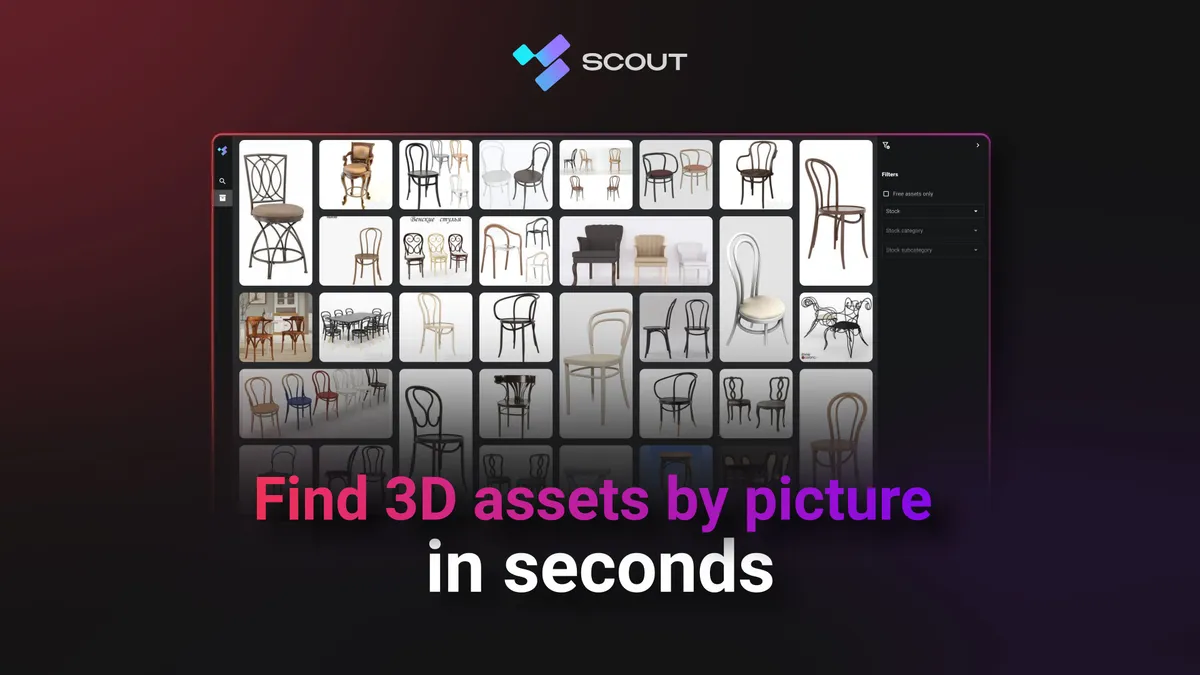
Anyone who works in 3D knows the moment: you have a reference image in mind, you know the perfect model exists somewhere across a dozen marketplaces, but you cannot remember the name or which site sold it. Scout by Asseter AI is built for exactly that. It is a visual search engine for 3D assets. You drop in a picture, and it scans across many libraries at once to surface the closest matching models, instead of you bouncing between marketplaces typing keyword guesses.
What it is
Scout is an AI-powered 3D asset search tool from Asseter.ai. Rather than searching by text, it searches by image. Feed it a reference and it scans hundreds of thousands of 3D models across the biggest asset stores to return visual matches. It covers a wide spread of libraries in parallel, from photoreal Megascans surfaces to archviz furniture on 3DSky to game-ready props on CGTrader, pulling both free and paid results into one place.
How it works
The default behavior is straightforward: drop a picture, and Scout finds the most similar models for it. The search runs across nine or more libraries at the same time, which is the part that saves the real time, because you are not repeating the same hunt on each marketplace.
Search asset by picture
In the standard mode you provide one reference image and Scout returns the closest matching 3D models ranked by visual similarity. This is ideal when you know what you want a thing to look like but not what it is called.
Picture Assembler
The more advanced mode handles complex scenes. Picture Assembler detects individual objects within a complicated image and suggests the 3D models, textures, and shaders you would need to recreate that scene in 3D. Instead of one match, you get a shopping list of components to rebuild a reference frame.
Free assets filter and organization
A free assets filter narrows results to models that cost nothing, which is handy when budget matters or you are prototyping a scene before committing to paid licenses. You can also save, organize, and share your favorite finds, so Scout doubles as a lightweight asset shortlist rather than just a one-off search. For a team, that sharing piece quietly matters: a lead can scout a set of candidate models, hand the shortlist to the people building the scene, and skip the back-and-forth of describing what they had in mind. It turns a personal search habit into something the whole pipeline can lean on.
Who it is for
Scout is aimed at 3D artists, archviz studios, game designers, and product visualizers, basically anyone who spends meaningful time sourcing assets. Game developers in particular benefit, since pulling together props, environments, and characters is a constant task and image-based search cuts the friction of finding the right model. If your pipeline rarely buys or licenses external assets and you model everything in-house, Scout has less to offer, but for teams that lean on marketplaces it removes a recurring chore.
Use cases
- Finding a 3D model when you have a reference image but not the name
- Sourcing matching props across CGTrader, 3DSky, Megascans, and more in one search
- Breaking down a complex reference scene into purchasable assets with Picture Assembler
- Filtering to free models for prototyping or tight budgets
- Building and sharing curated asset shortlists across a team
Pricing and plans
Scout uses a tiered model. There is a free tier with a limited number of searches per month, and several inexpensive paid tiers that raise or remove search limits. A team plan has been listed as coming soon on a per-user basis, and enterprise pricing is custom for larger organizations. Since limits and rates can change, confirm the current tiers on the Asseter.ai site before committing.
Verdict
Scout fills a genuinely annoying gap in the 3D workflow: it makes finding the right asset a matter of dropping an image rather than guessing keywords across many stores. The cross-library parallel search and the Picture Assembler mode are the features that earn their keep, turning a scattered hunt into a single ranked result. For artists and game teams who regularly buy or license assets, it is a low-cost time-saver that is easy to justify.