

If you are choosing a tool specifically to build and improve landing pages for paid campaigns, the useful question is not "can it make a page look good" but "how does it compare for the actual job of lifting conversion rates?" That framing matters because Unbounce sits in a different category from general website builders. It is a conversion-focused landing page platform, and most of its distinctive machinery is aimed at testing and traffic routing rather than site design. Judged against that specific kind of work, it makes some deliberate tradeoffs worth understanding before you commit.
What separates it from a generic page builder
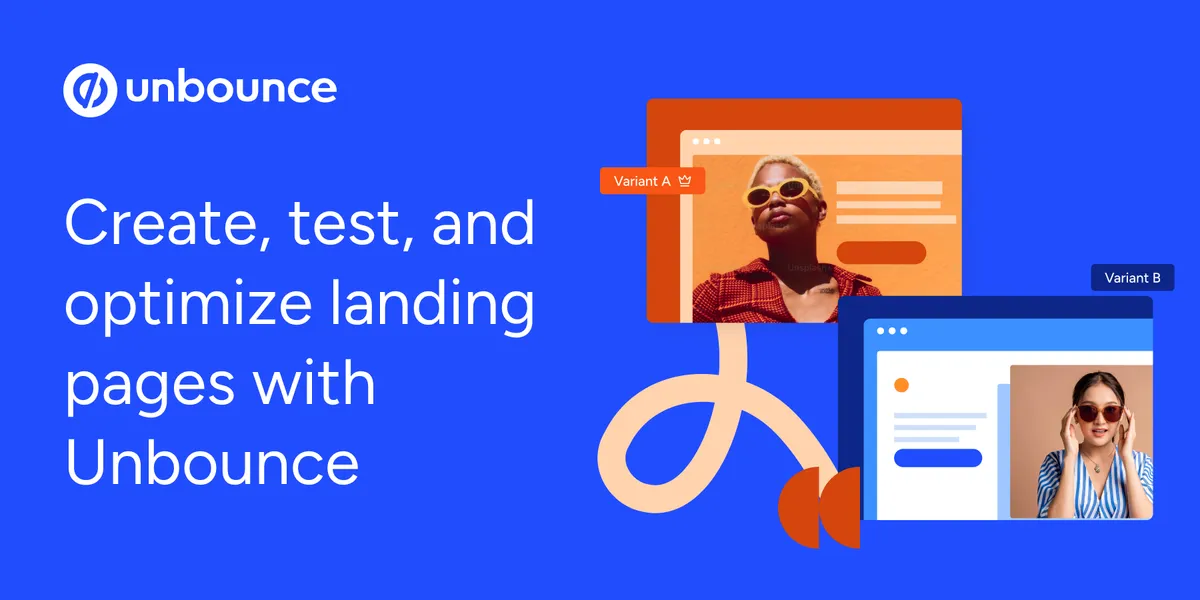
The clearest differentiator is Smart Traffic. Instead of running a conventional A/B test where you wait for statistical significance and then pick a winner, Smart Traffic uses AI to route each incoming visitor to the page variant it predicts will convert best for them, based on attributes such as device, location, and browser. Unbounce states that marketers who enable it get, on average, 30% more sales and signups, a figure the company attributes to data collected across 2020. Two practical caveats follow from how it works: the feature needs roughly 50 visits before it begins optimizing, so it is not useful for very low-traffic pages, and the 30% is an average across many accounts rather than a promise for yours. On thin traffic you are better served by the platform's standard no-code A/B testing, which lets you spin up variants and launch a test with a single click.
The second differentiator is that AI is threaded into content creation as well as routing. Smart Copy can rewrite, expand, or summarize page copy, and the builder can draft layouts and text so a marketer can get a first page live without waiting on a developer or designer. This is where Unbounce competes most directly with the current wave of AI page tools: the value is speed to a testable page, not a finished brand site.
The features that carry the day-to-day work
- Drag-and-drop builder with conversion-oriented templates. The editor is designed around campaign pages, so the starting points are structured for lead capture and offers rather than multi-page sites.
- Dynamic Text Replacement. This swaps page text to match the keyword a visitor searched, which is the standard technique for keeping ad-to-page message match tight on PPC campaigns. If you buy a lot of keywords, this directly affects Quality Score and relevance.
- Popups and sticky bars. On-site lead capture that runs alongside the page itself, useful for exit intent or secondary offers without building a separate asset.
- Custom code support. An escape hatch for teams that need scripts, tracking, or bespoke elements the visual editor does not cover.
- Real-time analytics. Conversion reporting inside the platform so you are not stitching together numbers to judge a test.
- Integrations. Native connections include Google Analytics, HubSpot, Salesforce, Mailchimp, Zapier, Twilio, Chili Piper, and Insightly, which covers the common CRM, email, and scheduling paths a lead needs to flow into after conversion.
Unbounce also positions the platform on scale it has seen: it cites being built on over two billion conversions and publishes conversion benchmarks drawn from 57 million landing page conversions. Treat those as context for the AI's training and benchmarking rather than a guarantee about results. You can see how it stacks up against other tools in the same space on the AI landing page builder category page.
Pricing measured against what you get
Unbounce is a paid product with a 14-day free trial that does not require a credit card. There is no permanent free plan. Pricing is tiered mainly by traffic volume, number of published pages, users, and root domains, with annual billing cutting the effective monthly rate below the month-to-month price.
| Plan | Monthly (billed annually) | Traffic / mo | Users | Root domains |
|---|---|---|---|---|
| Starter | $22 ($29 monthly) | 500 | 1 | 1 |
| Build | $74 ($99 monthly) | 20,000 | 1 | 1 |
| Experiment | $112 ($149 monthly) | 30,000 | 3 | 2 |
| Optimize | $187 ($249 monthly) | 50,000 | 5 | 3 |
| Concierge | Custom | 100,000+ | 15 | 5 |
| Agency | Custom | 50,000+ | 5+ | 10+ |
The pricing tells you who the platform is built for. Starter is capped at five pages and 500 visitors a month, which is realistically a trial-grade tier rather than a working campaign plan. The economics only make sense once you are spending on traffic: at $74 or more per month, the tool has to earn its cost through incremental conversions, so it fits teams already running paid acquisition where a few percentage points of lift covers the subscription many times over. Unbounce does not publish, in its plan comparison, exactly which tier unlocks Smart Traffic, so if that AI routing is your reason for buying, confirm its availability on your intended plan before subscribing.
Where it falls short
- Traffic-based caps can bite. Visitor limits are the primary lever between tiers, so a successful campaign that drives more traffic than expected can push you into a higher plan. Budget for the tier above where you think you land.
- Not a website builder. This is a purpose-built landing page and testing tool. If you want a full multi-page site, blog, or store, it is the wrong shape of product.
- Smart Traffic needs volume. With a roughly 50-visit warm-up before optimization kicks in, low-traffic or short-burst campaigns will not get much from the flagship AI feature.
- No free tier and a short trial. Fourteen days is enough to evaluate the editor but tight for gathering meaningful test data, so plan your trial around a live campaign if you want to judge the AI outcomes.
- Headline results are averages. The 30% lift and the large conversion datasets describe the aggregate, not your niche, offer, or audience.
How to think about alternatives
Because Unbounce is specialized, the right comparison depends on your real need. If you want an all-in-one website builder that also does landing pages, a dedicated conversion platform is overkill and a general site builder will serve you better. If your traffic is too low for AI routing to activate, a simpler A/B testing tool, or the platform's own manual testing, may deliver the same insight at lower cost. If you are an agency managing many client domains, the multi-domain and multi-user tiers are the feature set to compare against other agency-oriented platforms. Rather than name-matching on brand, list the three things you actually need, page volume, traffic scale, and whether AI routing is central, and compare on those. The broader tool directory and the blog are useful for shortlisting on those criteria.
Verdict
Unbounce is a strong fit for one clearly defined situation: performance marketers, PPC teams, and SaaS or B2B companies that run paid traffic and need pages engineered to convert, with testing and AI routing built in rather than bolted on. Its Smart Traffic and Dynamic Text Replacement earn their keep specifically when meaningful traffic and ad spend are already flowing. It is a poor fit for anyone wanting a general website, and its entry tier is too limited to run a real campaign, so the honest starting point is Build or above. Used for the job it was designed for, with realistic expectations about the averaged results and the volume its AI needs, it is a defensible choice. Use the free trial against a live campaign to see whether the lift materializes for your offer before committing to an annual plan.
Common questions
Does Unbounce have a free plan?
No. Unbounce offers a 14-day free trial that does not require a credit card, but there is no permanent free tier. After the trial you move to a paid plan.
What conversion improvement does Smart Traffic claim?
Unbounce states that marketers who turn on Smart Traffic get 30% more sales and signups on average, a figure it attributes to data collected across 2020. Smart Traffic needs roughly 50 visits before it begins optimizing, so it suits pages with steady traffic.
How much does Unbounce cost?
Paid plans start at $22 per month billed annually ($29 monthly) for Starter, rising through Build at $74, Experiment at $112, and Optimize at $187 per month on annual billing. Concierge and Agency plans are custom-priced. Tiers differ mainly by monthly traffic, published pages, users, and root domains.
What can it connect to?
Documented native integrations include Google Analytics, HubSpot, Salesforce, Mailchimp, Zapier, Twilio, Chili Piper, and Insightly, covering common CRM, email, and scheduling destinations for captured leads.
Is Unbounce a full website builder?
No. It is a landing page and conversion platform. It builds campaign pages, popups, and sticky bars with A/B testing and AI routing, not multi-page sites, blogs, or online stores.