
The short version
Smallpdf AI is the set of AI features layered on top of Smallpdf, a browser-based PDF toolkit. Rather than being a standalone summarization product, it treats "chat with a document" and "summarize a document" as two more tools alongside converting, merging, compressing, editing, and signing PDFs. That framing matters more than any single feature, because it tells you who should adopt it and who should look elsewhere.
My verdict up front: Smallpdf AI is a sensible choice if you already live inside Smallpdf's toolkit and want to pull quick answers or a summary out of files you were going to process anyway. It is a weaker choice if your primary need is deep, high-volume document analysis, because Smallpdf's public materials do not document the limits, model, or accuracy guarantees that a research-grade workflow depends on. Treat it as a convenience feature, not a replacement for reading source material you must be certain about.
Who gets the most out of it
The AI features make the most sense for a few specific working styles:
- People already using Smallpdf for file conversion and signing. If you routinely convert PDFs to Word, compress attachments, or e-sign documents here, asking a question about the same file without switching apps is a genuine time saver.
- Students and office workers facing long, dense PDFs. The summarizer's stated purpose is turning lengthy documents into short overviews so you can decide whether a file is worth a full read.
- Anyone dealing with scanned or handwritten pages. Smallpdf states the chat feature uses OCR, so it can read scanned documents and handwriting, not just born-digital text. That is useful for archived contracts, receipts, or older reports.
- Multilingual readers. The tool is documented to read, summarize, and answer in whatever language is present in the file, which helps when you receive documents you do not want to translate first.
If you need to compare dozens of documents at once, cite sources with precision, or run summarization at scale through an API, this is not built for that use case based on what the vendor publishes.
What the AI actually does, and the tradeoffs
Chat with PDF
Chat with PDF lets you ask a document questions and get answers pulled from its content, including page-specific queries and keyword-style searches. The practical value is navigation: instead of scrolling a 60-page report looking for a clause or figure, you ask where it is. Smallpdf documents support for PDF, DOC, XLS, PPT, PNG, and JPG inputs, so it is not limited to native PDFs.
The tradeoff is trust. Any document-chat tool can misread or fabricate, and Smallpdf's pages do not publish accuracy figures or a guarantee that every answer is grounded in the source. For low-stakes navigation this is fine. For anything where a wrong answer has consequences (legal terms, financial figures, medical detail), verify the answer against the page it cites rather than acting on the chat response alone.
AI PDF Summarizer
The summarizer condenses long files into short overviews and supports follow-up questions to go deeper on a point. This is the classic "should I read this" filter: run a summary, decide relevance, then read the parts that matter. Its weakness is the same as every automatic summarizer, which is that it decides what counts as important. A summary optimized for the main argument can drop a caveat or exception that is the very thing you needed. Use it to triage, not to replace reading documents you are accountable for.
The surrounding toolkit is the real draw
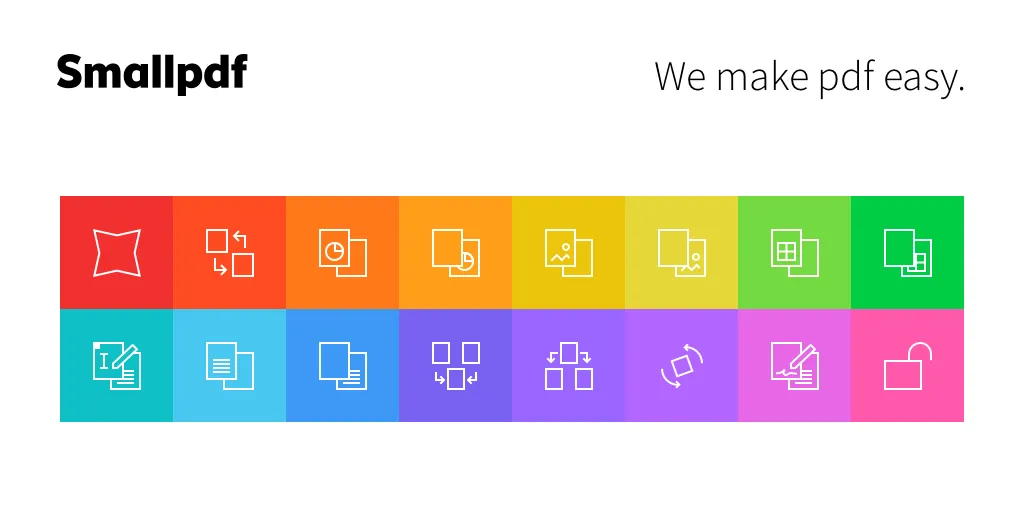
The AI is most useful because of what sits next to it. Smallpdf publishes 30-plus tools spanning compression, conversion between PDF and Office/JPG formats, page organization (merge, split, rotate, extract), editing and annotation, redaction, and e-signatures with document tracking. It integrates with Google Workspace and Dropbox and runs across web, iOS, Android, a Windows desktop app, and a Chrome extension. On security, the company cites 256-bit TLS encryption, ISO/IEC 27001 certification, and GDPR/CCPA/nFADP compliance. For most people the honest reason to use Smallpdf's AI is that the file is already open in a tool they trust for these other jobs. You can browse comparable options in the AI summarizer category.
Where it falls short
- Undocumented limits. Smallpdf does not publish file-size caps, page limits, or maximum document lengths for the AI tools. If you work with very large files, you cannot know in advance whether they will be handled well.
- No published model or accuracy detail. The underlying model, context handling, and any grounding or citation guarantees are not disclosed, so you have to validate output quality yourself.
- Not an analysis platform. There is no documented multi-document analysis, corpus-wide search, or API for programmatic summarization in the public materials. It is a per-file assistant.
- Free access is limited. Full access is gated behind a paid subscription after a trial period, so sustained daily use of the AI features generally requires paying.
Pricing and how to think about it
Smallpdf uses a freemium model. It advertises a 7-day free trial with unlimited access to all tools, after which paid plans apply. The company lists two paid tiers on its site. Specific monthly and annual prices were not readable in the material I could verify, so treat the figures below as structure only and confirm current rates on the vendor's pricing page before buying.
| Plan | Who it targets | What is documented |
|---|---|---|
| Free trial | Anyone evaluating | 7 days, unlimited access to all tools |
| Pro | Individuals | Per-user, billed annually |
| Team | Groups of 2 to 100 users | Per-user, billed annually, with team features |
The practical guidance: because the AI tools sit inside the broader toolkit, judge the subscription on the whole package (conversion, signing, editing, plus AI), not on the AI alone. If you would pay for Smallpdf's PDF tools regardless, the AI is a bonus. If you want AI summarization only, the subscription may be more than you need. Run the trial against your real documents first, including any scanned files, to see whether the output quality justifies the cost for your work.
Alternatives worth weighing
The right comparison depends on your priority. If document processing (convert, merge, sign) is central and AI is secondary, Smallpdf is well positioned; other general PDF suites compete on that ground. If your priority is the AI itself, standalone document-chat and summarization tools may offer clearer limits, citations, or higher-volume workflows. Because I can only verify Smallpdf's own materials here, I will not name specific competitors as equivalent; instead, browse and compare options in the AI summarizer listings or the wider tools directory, and shortlist by whether they publish the limits and accuracy detail your use case requires.
Common questions
What file types can I use with Smallpdf's AI tools?
Smallpdf documents support for PDF, DOC, XLS, PPT, PNG, and JPG files. The chat feature also uses OCR, so it can read scanned documents and handwritten content, not only digital text.
Does it work with languages other than English?
Yes. Smallpdf states the AI can read, summarize, and answer questions in whatever language appears in the file, so multilingual documents are supported without translating them first.
Is there a free version?
Smallpdf offers a 7-day free trial with unlimited access to all tools. It uses a freemium model, and sustained access to the full toolset, including the AI features, is tied to a paid subscription after the trial.
Can it summarize a scanned or image-based PDF?
It can. Because the chat tool applies OCR and accepts image formats like PNG and JPG, it can extract text from scanned pages and then summarize or answer questions about them.
Can I ask about a specific page rather than the whole document?
Yes. Smallpdf documents page-specific queries, so you can direct questions at a particular section instead of the entire file, which helps when navigating long reports.