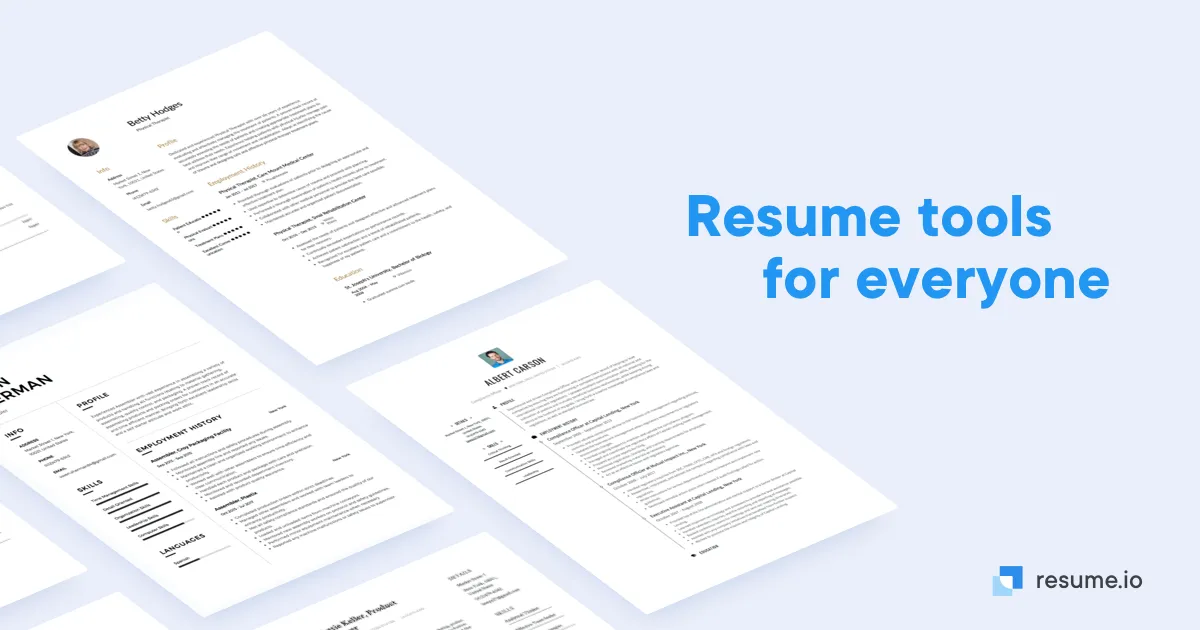

The practical value of Resume.io is simple to state: it turns the blank-page problem into a fill-in-the-blanks task. You pick a template, answer prompts section by section, and the tool handles layout, spacing, and formatting while suggesting wording as you type. For anyone who has stared at an empty document trying to make ten years of work sound coherent, that structure is the point. What follows is a look at what the platform actually does, why each piece is useful, and where it falls short.
What Resume.io is trying to solve
Resume.io is a web-based resume builder. You do not install anything; you work in a browser and the document renders live as you edit. The company states that more than 12 million users have used its most popular template, and it carries a 4.2 out of 5 rating across roughly 55,000 Trustpilot reviews. Those numbers describe reach and general satisfaction, not the quality of any individual resume you will produce, so treat them as context rather than proof.
The core promise is speed with a floor on quality. Instead of fighting margins in a word processor, you get a designed template and guided prompts, and the AI fills gaps in your phrasing. That trade is worth understanding up front: you give up granular layout control in exchange for a result that looks consistent and reads cleanly.
The features that matter, and when each one earns its place
Rather than list everything, it is more useful to pair each capability with the moment it actually helps.
- AI writing suggestions. The builder proposes phrasing for experience bullets and summaries, and it can correct mistakes and suggest more professional wording as you write; it also supports speech-to-text input. Why it matters: most people undersell their own work or write in vague terms. Getting a suggested phrasing to react to is faster than inventing one from nothing. Use it as a starting draft, then rewrite the specifics in your own voice, because generic AI bullets read as generic to recruiters who see hundreds of them.
- ATS-oriented templates. Resume.io offers a set of templates it markets as ATS-compliant, alongside modern, professional, and simple styles, plus Word- and Google Docs-friendly options. Why it matters: many employers run resumes through applicant tracking software that struggles with multi-column layouts, text boxes, and graphics. A clean, single-column, parseable template reduces the chance your resume is mangled before a human ever sees it. If you are applying through large corporate portals, deliberately choose one of the ATS templates rather than the most visually elaborate one.
- Live preview. The formatted document updates as you type. Why it matters: it removes the guesswork of exporting, checking, and re-editing. You can see immediately when a section is running onto a second page or when a bullet is too long.
- Matching cover letter builder. The tool creates cover letters that match your resume's styling, and it can generate a letter from a pasted job link in about two minutes. Why it matters: a visually consistent resume and cover letter looks intentional, and pasting a job link gives the AI context to tailor the letter. As with the resume text, the draft is a scaffold; the specific reasons you want that particular job still need to come from you.
- Export formats. Downloads are available in PDF and Word (.docx) formats on paid plans. Why it matters: PDF preserves your formatting for most direct applications, while an editable Word file is useful when a recruiter or a portal specifically asks for one. Note the constraint: on the free plan, exports are limited to plain-text (TXT) only, which strips all the formatting the tool just built for you.
The website also lists additional job-search features beyond document creation, including a recruiter-matching service, interview practice with feedback, a salary analyzer, and an assisted application option. These extend the platform past resume building into the broader job hunt. They are worth knowing about, but they are secondary to the reason most people arrive here, and the availability and terms of each are not fully documented on the public pages.
Where it fits in a real job search
A recent graduate with thin experience benefits most from the guided prompts and suggested phrasing, because the hardest part at that stage is knowing what to include and how to word it. A career changer can lean on the AI to reframe past responsibilities in language that reads relevant to a new field, then edit heavily for accuracy. An active applicant sending many applications gets value from the live preview and the matching cover letter tool, which cut the per-application time down considerably once the base resume exists.
Where it fits poorly: anyone who needs a highly custom, brand-specific layout, or a designer or creative professional whose resume is itself a portfolio piece. Template-based tools like this one intentionally constrain design choices, and that constraint is a feature for most people and a wall for a few. If you find yourself fighting the template, a design tool is the better home for that work.
How the pricing is structured
Resume.io runs on a freemium model. You can build and preview a resume for free, which is genuinely useful for seeing whether the workflow suits you before paying. The catch is the export: the free plan only lets you download in plain-text format, so to get the formatted PDF or Word file the tool produces, you need a paid plan.
Paid access is offered as a short-term plan (a roughly week-long access period) and a monthly plan, both unlocking unlimited resumes and cover letters, all premium templates and colors, and unlimited PDF downloads, with a stated money-back guarantee window. Specific prices vary by region and are not published as a single USD figure the vendor commits to publicly, so confirm the current amount and currency on the checkout page before you subscribe. One detail deserves real attention: the site describes a 7-day trial that automatically rolls into a recurring subscription unless you cancel. That auto-renewal pattern is common in this category and is also the most frequent source of billing complaints across resume tools generally, so if you only need a one-time document, set a reminder to cancel or choose the one-time short-term option deliberately.
| Plan | Export | Resumes and cover letters | Templates |
|---|---|---|---|
| Free | TXT only | Limited | Restricted |
| Paid (short-term / monthly) | PDF and Word | Unlimited | All premium templates and colors |
An honest read on strengths and limits
The strengths are the guided flow, the clean ATS-friendly templates, the live preview, and the matched cover letter builder. Together they get a competent resume out the door quickly for someone with no design or copywriting background. The limits are equally clear: the free tier's TXT-only export means the free version is really a preview rather than a usable free product; layout customization is bounded by the templates; and the auto-renewing trial requires you to manage cancellation actively. The AI is a helpful drafting aid, not a substitute for tailoring each application, and resumes assembled entirely from stock suggestions tend to read that way.
If you want to compare options before committing, browse other AI resume builders in the same category, or explore the wider tool directory to see how document tools stack up against broader job-search platforms.
Common questions
Is Resume.io free to use?
You can build and preview a resume at no cost, but the free plan only allows downloads in plain-text (TXT) format. To export a formatted PDF or Word document, you need a paid plan.
Does Resume.io create ATS-friendly resumes?
Yes. The platform offers templates it markets as ATS-compliant, designed to be readable by applicant tracking systems. If you are applying through large corporate portals, choose one of those templates rather than a heavily styled one.
Can it write my resume with AI?
It provides AI writing suggestions for bullet points and summaries, can correct mistakes and propose more professional phrasing as you type, and supports speech-to-text input. It is best used to draft content you then edit for accuracy and specifics.
Does it build cover letters too?
Yes. Resume.io includes a cover letter builder that matches your resume's styling and can generate a letter from a pasted job link in about two minutes.
Will I be charged automatically after the trial?
The site describes a 7-day trial that automatically converts to a recurring subscription unless you cancel. If you only need a one-time document, cancel before the trial ends or choose a one-time short-term option, and verify the current price and currency at checkout.