
Claude vs Gemini AI: Which Should You Use in 2026
Claude and Gemini both excel in different areas. Here's an honest comparison of Anthropic's and Google's AI assistants to help you pick the right one.
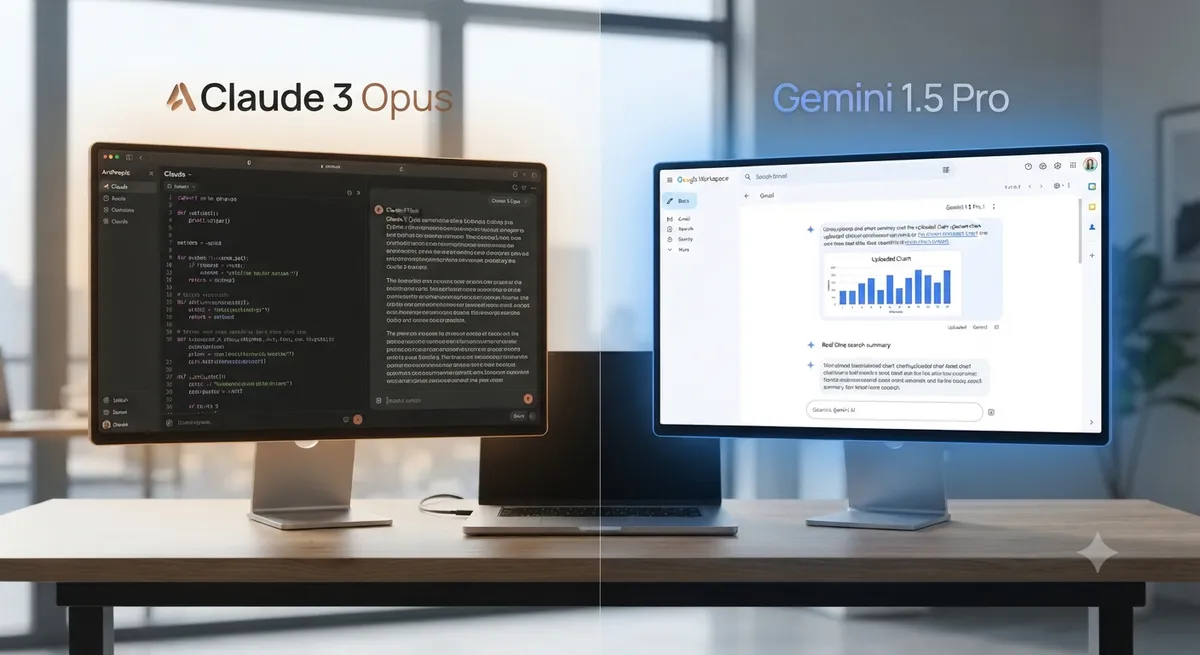
Both Claude and Gemini AI have become serious contenders in the AI assistant space, but they've taken genuinely different approaches to get there. Here's an honest comparison to help you decide which fits your actual workflow.
The Core Difference in Philosophy
Claude, built by Anthropic, has leaned heavily into careful reasoning, coding reliability, and safety-conscious design. Gemini, built by Google DeepMind, has leaned into native multimodality and deep ecosystem integration across Search, Workspace, and Android. Neither approach is "wrong" — they simply optimize for different things.
Coding Ability
Claude has built a particularly strong reputation among developers, especially for agentic coding tasks where the model needs to plan, execute, and verify its own work across multiple steps. Claude Sonnet 5 and Opus 4.8 are commonly used for daily development work and harder coding challenges respectively. Gemini has closed much of this gap recently too — Gemini 3.1 Pro posted a strong SWE-Bench Verified score, and Gemini 3.5 Flash is specifically optimized for parallel agentic coding execution. For most developers, both are genuinely competitive picks worth testing directly against your own codebase.
Context Window and Document Handling
Gemini has traditionally held an edge here, with some tiers supporting context windows large enough to process entire codebases, hour-long audio, or hundreds of pages of documents in a single prompt. Claude's higher tiers also support large context windows suitable for lengthy document analysis, though Gemini's ceiling has generally been higher for the most extreme long-context use cases.
Multimodal Capabilities
Gemini was architected from the start to handle text, images, audio, and video together natively, and this shows in its image generation (the Nano Banana models) and video analysis capabilities. Claude supports image understanding and document analysis well but doesn't natively generate images or video the way Gemini's ecosystem does.
Ecosystem Integration
This is where Gemini has a clear structural advantage: if your work already lives inside Gmail, Docs, Sheets, or Drive, Gemini can act directly on that content without you copying anything between apps. Claude's ecosystem integration is growing (through Claude Code, Claude Cowork, and MCP-based connectors) but doesn't yet match Google's decade-plus head start inside its own productivity suite.

Writing Quality and Tone
A commonly cited difference: Claude tends to produce writing that feels more natural and less repetitive, with many users noting it avoids some of the more formulaic patterns seen in other assistants. Gemini's writing is solid and clear but has occasionally been described as more reserved or "safe" in tone compared to Claude's output on creative or nuanced writing tasks.
Pricing and Free Tiers
Both offer genuinely usable free tiers. Claude.ai's free plan covers everyday chat and coding help, while paid tiers unlock higher usage and more capable models like Opus or Fable 5. Gemini's free app tier is generous for everyday tasks, with Google AI Studio also offering free developer access to lighter Gemini models with high daily limits. Neither is meaningfully "cheaper" outright — it depends on which specific model tier and usage volume you need.
Which One Should You Actually Pick?
- Choose Claude if: coding reliability and careful, nuanced writing are your priority, especially for agentic development work.
- Choose Gemini if: you're already inside Google Workspace, need very large context windows, or want native image/video generation in the same tool.
- Use both if: you have distinct use cases — many power users keep Claude for coding and writing while using Gemini for research tied to Google Docs or Search.
For a broader look at how both stack up against ChatGPT as well, see our ChatGPT AI vs free AI tools comparison and what is Claude AI guide.
What About Developers Specifically?
For developers deciding between the two for coding work specifically, our AI tools for developers directory and AI code generator category both list current coding-focused options, including both Claude and Gemini-based tools, side by side.
Frequently Asked Questions
Is Claude or Gemini better for coding?
Both are genuinely strong, with Claude holding a slight edge in developer reputation for agentic coding, while Gemini has closed much of that gap with recent model releases. Testing both against your specific codebase is the most reliable way to decide.
Which has a bigger context window, Claude or Gemini?
Gemini has generally offered larger maximum context windows, suitable for processing very long documents, codebases, or media files in a single prompt.
Is Gemini better if I use Google Workspace?
Yes, Gemini's deep integration with Gmail, Docs, Sheets, and Drive gives it a clear practical advantage for anyone already working inside that ecosystem.
Are both Claude and Gemini free to use?
Yes, both offer genuinely usable free tiers for everyday chat and writing tasks, with paid plans unlocking higher usage limits and more advanced model tiers.
Final Thoughts
Claude and Gemini have both matured into serious, distinct options rather than one being a clear "winner" over the other — the right pick depends on whether coding and writing quality or ecosystem integration and multimodal range matter more for your workflow. Compare both alongside other AI assistants in the full AI tools directory on AI List Stack.
Want to stay updated?
Get the latest AI tool reviews and news delivered to your inbox.